✨ New Arrivals Just Dropped!Explore
Why People Photograph
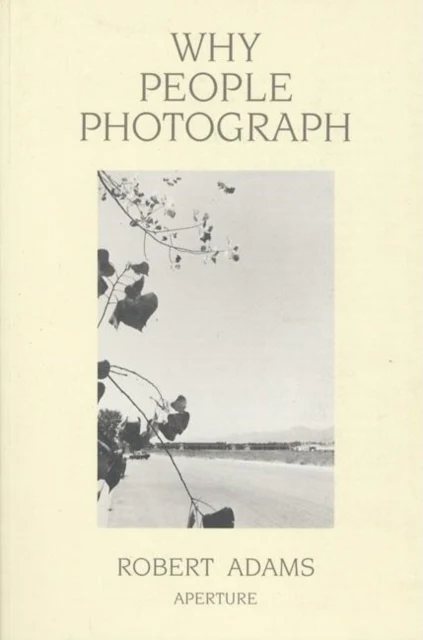
A now classic text on the art, Why People Photograph gathers a selection of essays by the great master photographer Robert Adams, tackling such diverse subjects as collectors, humor, teaching, money and dogs. Adams also writes brilliantly on Edward Weston, Paul Strand, Laura Gilpin, Judith Joy Ross, Susan Meiselas, Michael Schmidt, Ansel Adams, Dorothea Lange, and Eugène Atget. The book closes with two essays on "working conditions" in the nineteenth- and twentieth-century American West, and the essay "Two Landscapes." Adams writes: At our best and most fortunate we make pictures because of what stands in front of the camera, to honor what is greater and more interesting than we are.
Product Information
Product Information
Shipping & Returns
Shipping & Returns
Why People Photograph
Why People Photograph
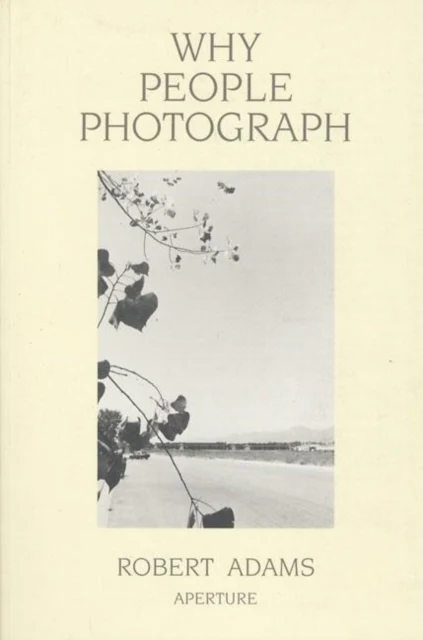
A now classic text on the art, Why People Photograph gathers a selection of essays by the great master photographer Robert Adams, tackling such diverse subjects as collectors, humor, teaching, money and dogs. Adams also writes brilliantly on Edward Weston, Paul Strand, Laura Gilpin, Judith Joy Ross, Susan Meiselas, Michael Schmidt, Ansel Adams, Dorothea Lange, and Eugène Atget. The book closes with two essays on "working conditions" in the nineteenth- and twentieth-century American West, and the essay "Two Landscapes." Adams writes: At our best and most fortunate we make pictures because of what stands in front of the camera, to honor what is greater and more interesting than we are.
$17.47
Why People Photograph—
$17.47
Product Information
Product Information
Shipping & Returns
Shipping & Returns
Description
A now classic text on the art, Why People Photograph gathers a selection of essays by the great master photographer Robert Adams, tackling such diverse subjects as collectors, humor, teaching, money and dogs. Adams also writes brilliantly on Edward Weston, Paul Strand, Laura Gilpin, Judith Joy Ross, Susan Meiselas, Michael Schmidt, Ansel Adams, Dorothea Lange, and Eugène Atget. The book closes with two essays on "working conditions" in the nineteenth- and twentieth-century American West, and the essay "Two Landscapes." Adams writes: At our best and most fortunate we make pictures because of what stands in front of the camera, to honor what is greater and more interesting than we are.